

Cognite’s Q3 2026 release advances our commitment to set the standard for trusted industrial AI at scale. Industrial AI scales value when industrial heroes have intuitive experiences to get work done faster and easier, data teams have the tools to build repeatable solutions, and models are grounded in trusted, contextualized data.
With more than 40 new features across the Cognite Industrial AI and Data Platform, this release strengthens how every layer works together to operationalize industrial AI. The Industrial Knowledge Graph provides the shared operational context that users, agents, and applications rely on. Atlas AI uses that context to turn domain expertise into trusted agentic capabilities, and Cognite Flows brings those capabilities into connected experiences for both frontline operators and technical experts. Working as one platform, these layers make industrial AI trustworthy, usable, governable, replicable, and scalable across workflows, teams, and sites.
Cognite Flows: Extensible, context-aware workspaces for seamless frontline execution and enterprise-wide decision-making
Cognite Flows™ , the action layer of the Cognite platform released in May, continues to mature across Native Applications, Custom Applications, and Adaptive experiences. This quarter's work strengthens collaboration and advances the user experience for frontline users and technical user teams.
Custom Apps and Adaptive experiences:
Three months after the launch of certified Custom Applications, Cognite Flows is experiencing the fastest uptake of any product launched by Cognite. This is why we are doubling down on the developer experience to make it easier to build, verify, deploy, and update Custom Apps while expanding the operational experiences they can support.
This release gives app builders a more reliable path from development to deployment. Built-in safeguards let developers easily verify the integrity of every version, while enhanced troubleshooting guidance accelerates issue resolution during rollout. Developers can also manage more versions and roll out updates faster, making Custom Apps easier to test and improve.
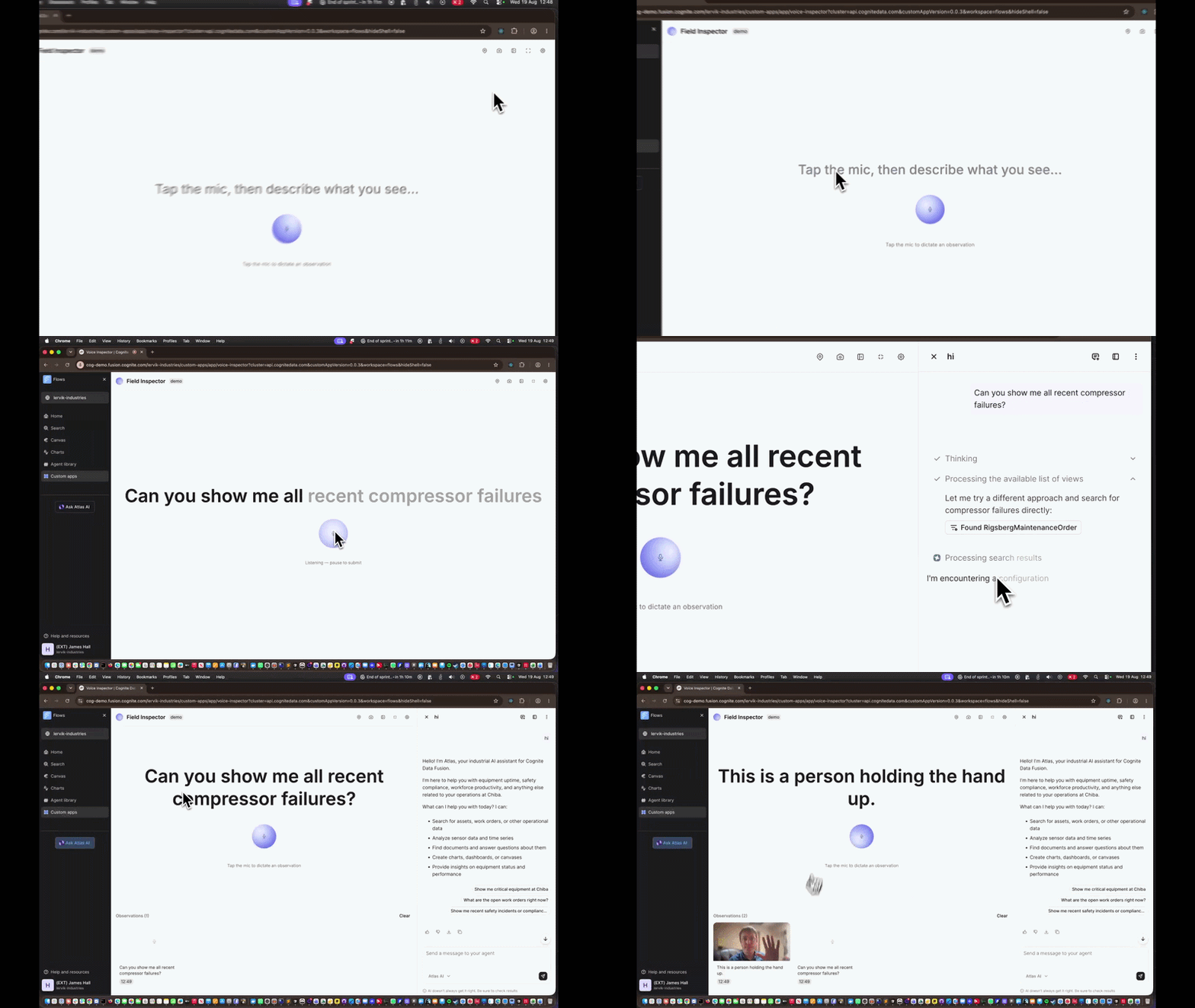
For frontline users, this translates into more advanced applications. For example, to bridge the Cognite platform's growing intelligence with physical environments, Cognite Flows now unlocks native access to cameras, microphones, and location services. Field workers can stream live video, capture site coordinates, and use hands-free voice mode to interact directly with AI agents on-site, giving agents visual, audio, and location context to help answer complex queries instantly.
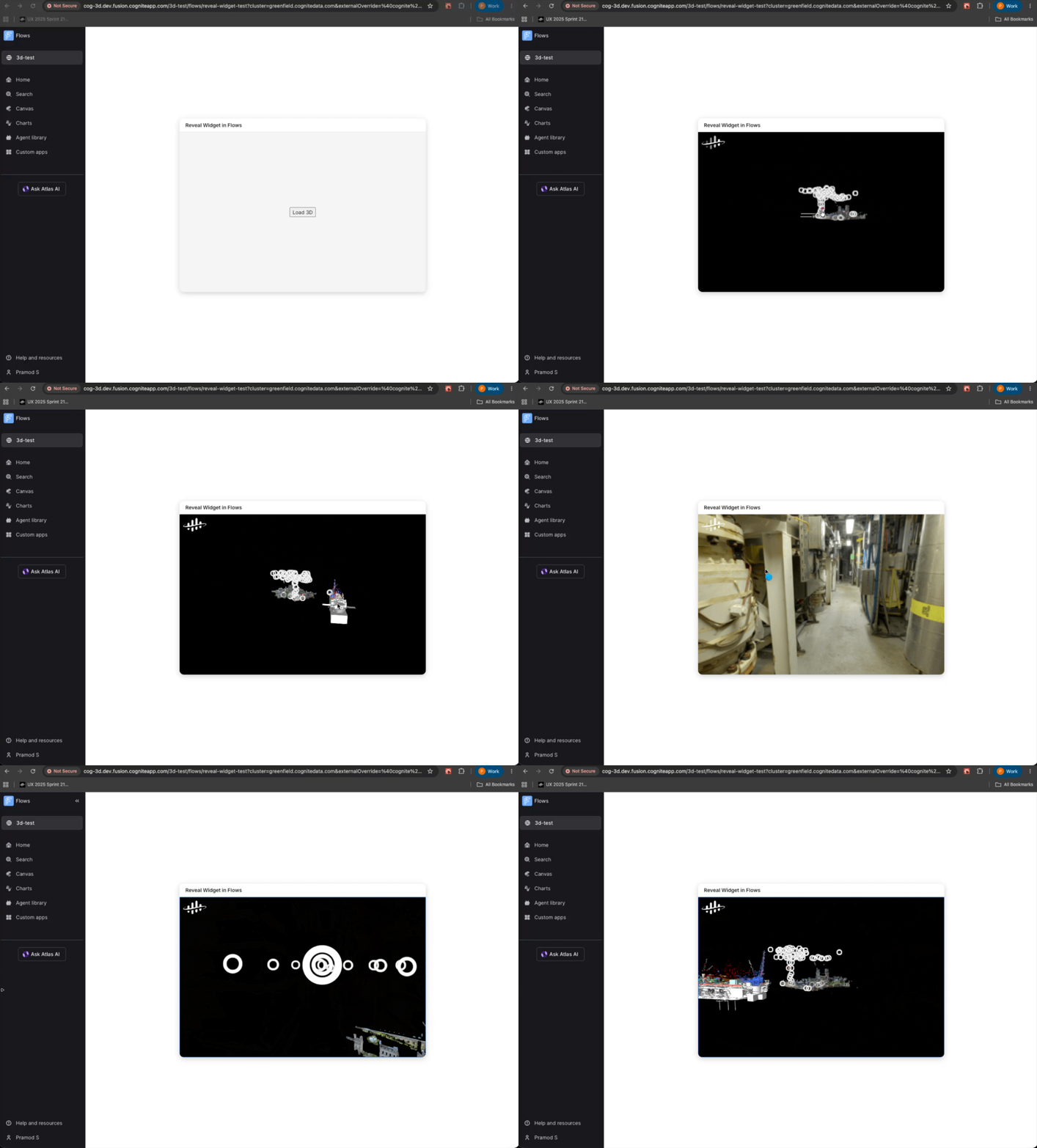
Furthermore, to bring spatial context directly into daily operations, the 3D Widget now works seamlessly outside Native Applications, extending full support to Cognite Flows, Adaptive Experiences, AI agents, and third-party partner solutions. Every Cognite user has a single, unified view that pairs real-time operational telemetry with interactive 3D physical models directly inside their personalized workspace. By bringing high-impact spatial awareness straight into Custom Apps and partner workflows, teams eliminate unnecessary site visits, slash inspection prep time, and accelerate critical maintenance decisions.
Custom Apps now supports full-screen mode, giving control room operators, production teams, and reliability engineers uninterrupted visibility across control rooms, plant floors, and monitoring stations. By keeping sessions active in the background, teams can continuously display live operational dashboards without disruption.
Native Applications:
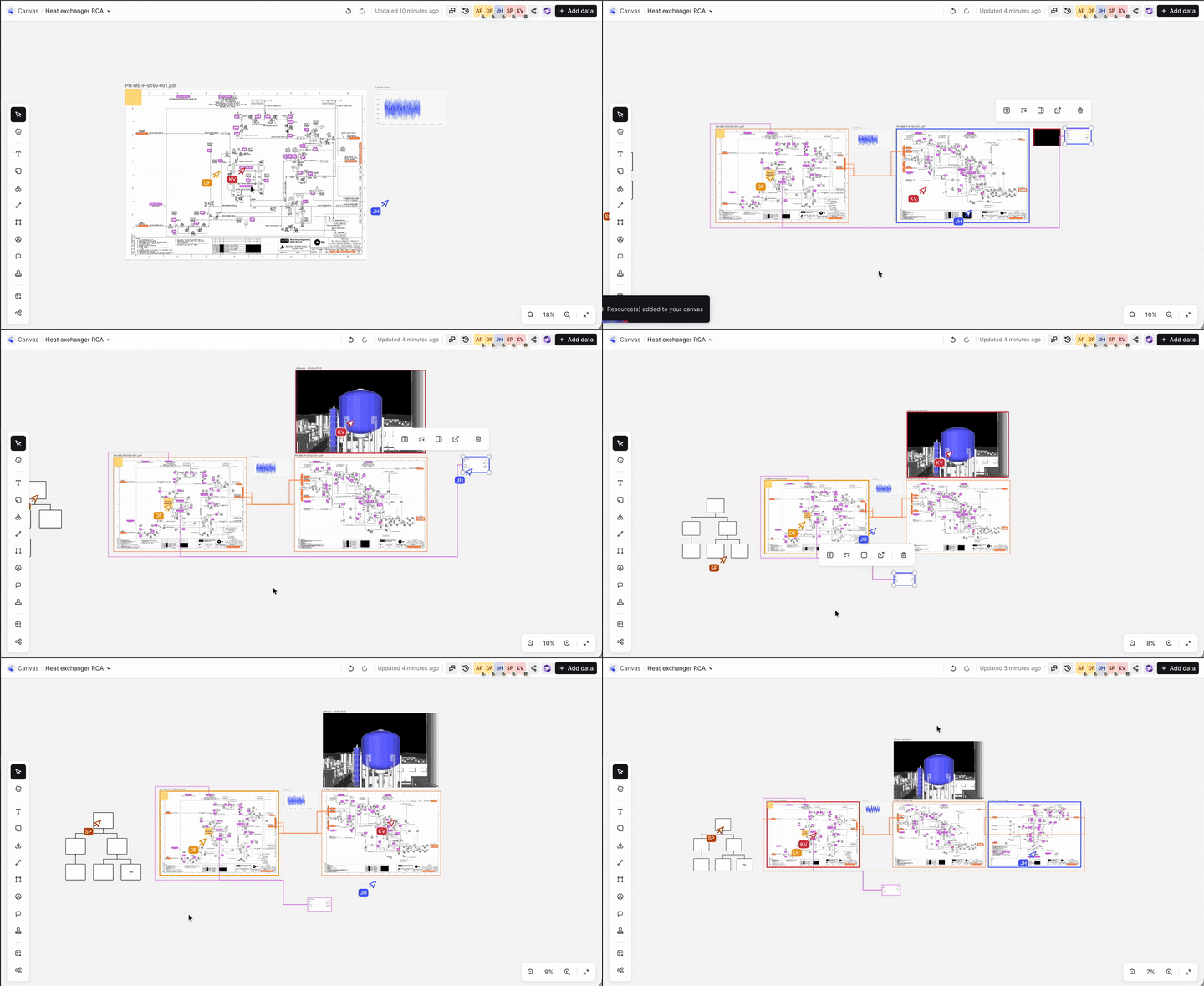
To accelerate collaborative problem-solving, Industrial Canvas expands its co-authoring capabilities with real-time multi-user editing. Engineering and reliability teams can work on the same root-cause analysis simultaneously, bringing their expertise into a live collaborative experience. This eliminates version conflicts and handoff delays, helping teams align on root causes and corrective actions faster. In addition, Canvas gains refreshed Cause Map layouts and one-step drag-and-drop file uploads to simplify population of the Canvas.
InField enhancements further improve frontline execution by making routine work faster and more organized. Supervisors can close multiple completed checklists at once, while operators can group checklist items by attributes such as location or equipment criticality and update entire groups together. These new capabilities reduce repetitive work and help field teams complete shift closeouts and inspection rounds in fewer steps.
Atlas AI: One trusted agentic experience across every workflow
We continue to improve how users work with AI agents across the Cognite Platform. Cognite Atlas AI™ now delivers a continuous, context-aware agent experience in which agents move with users across workspaces while retaining conversation and operational context, keeping analysis connected as work progresses.
Users can anchor a conversation to the exact operational issue by tagging relevant assets, equipment, or telemetry directly in the agent chat. Atlas AI carries those references into its analysis and provides clear, clickable citations for the insights, charts, and tables it generates. This allows domain experts to trace each answer back to the underlying information before taking action. Together, this connected and verifiable path from question to decision makes AI a trusted part of everyday industrial work.
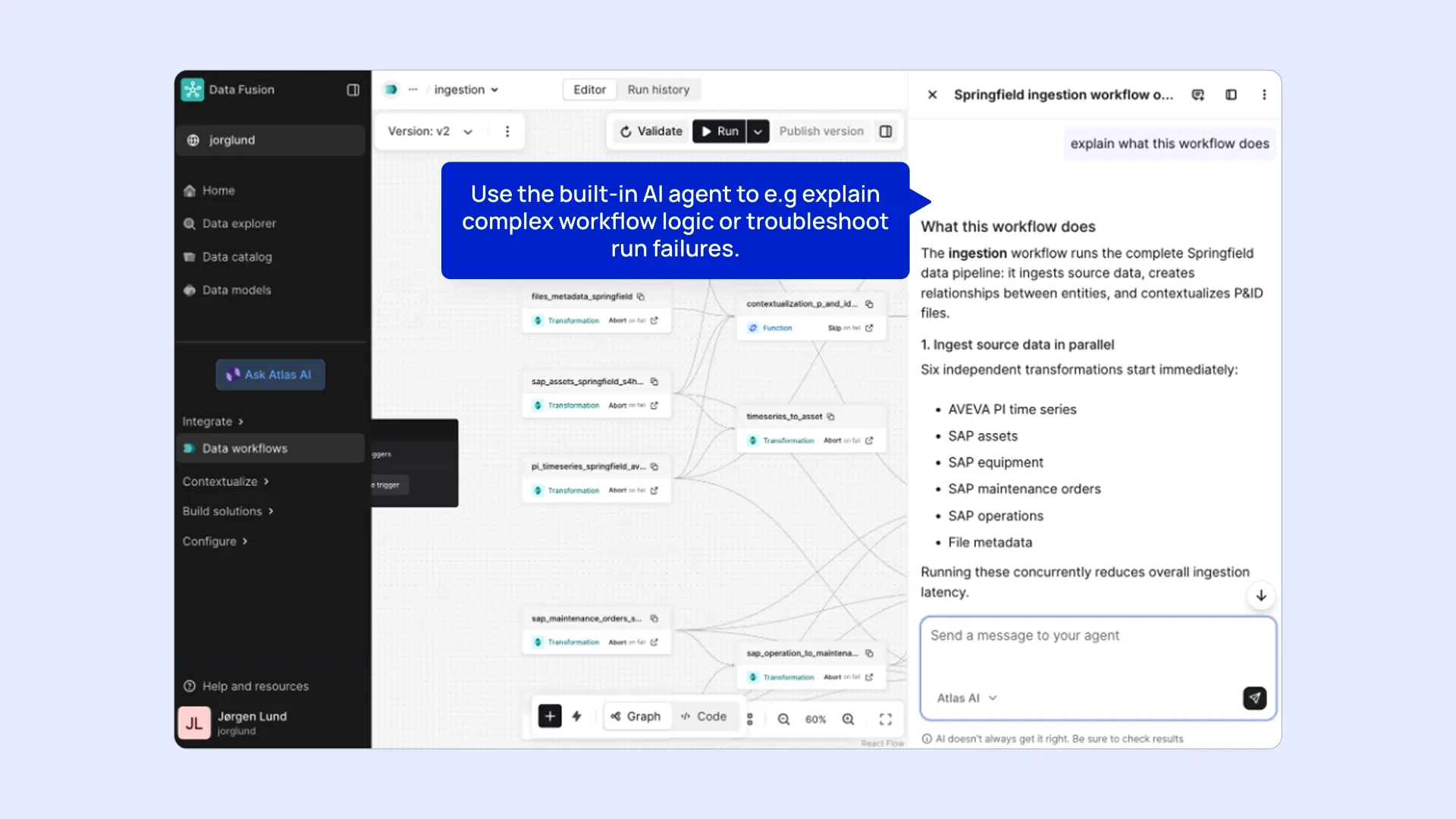
Atlas AI is also available in DataOps workflows. Atlas AI for Data Fusion Workspace (Public Preview) brings a context-aware agent directly into the environment where data engineers build and manage workflows. It analyzes dependencies and execution histories, pinpoints task-level failures, and can generate or refine tasks to adjust workflows in real time. This replaces manual investigation across separate logs and screens with collaborative, AI-assisted troubleshooting, helping teams resolve issues faster and keep critical industrial data flowing.
While Atlas AI remains the dedicated agentic workspace for native, end-to-end industrial execution, the same industrial context can now extend beyond the Cognite Platform ecosystem. Industrial MCP (Public Preview) enables third-party AI tools and agents, including Claude and Microsoft Copilot, as well as partner-built agents, to securely connect to Cognite Data Fusion® in minutes. Each agent has access to the exact same governed Industrial Knowledge Graph and user permissions that power Atlas AI, giving enterprise teams consistent context across whichever tools they use.
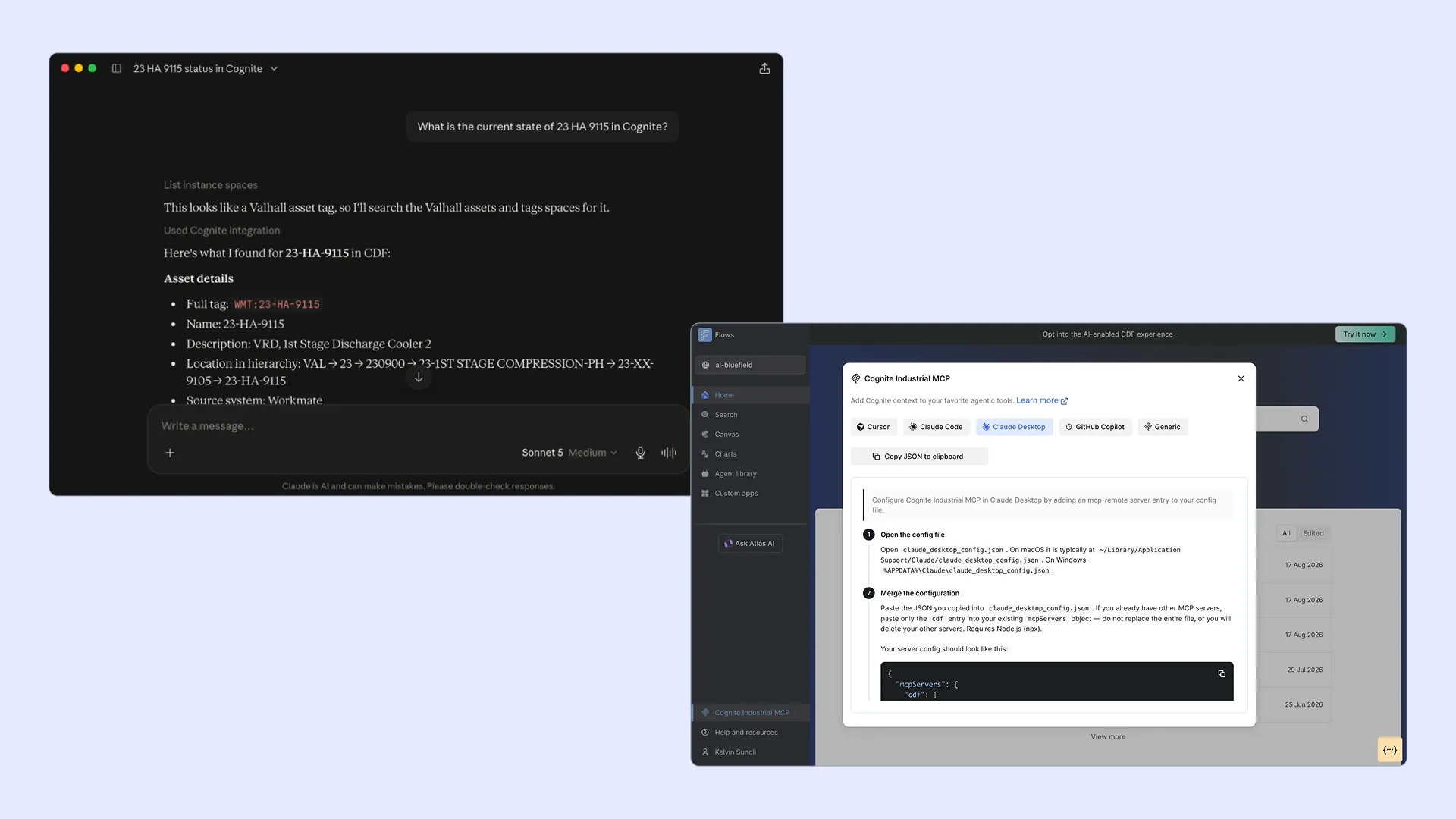
Together, these advancements deliver an enterprise-ready agentic framework, combining a trusted, context-rich experience for daily operations, robust engineering tools to build and scale agents safely, and governed access that extends Cognite's industrial intelligence across the broader AI ecosystem
Industrial Knowledge Graph: The AI-ready foundation for trusted operational context
Cognite Data Fusion® continues to serve as the bedrock for industrial intelligence across Cognite’s entire ecosystem. The Industrial Knowledge Graph sees significant enhancements in this update, with a focus on making complex operational data easier to connect, understand, and use at scale.
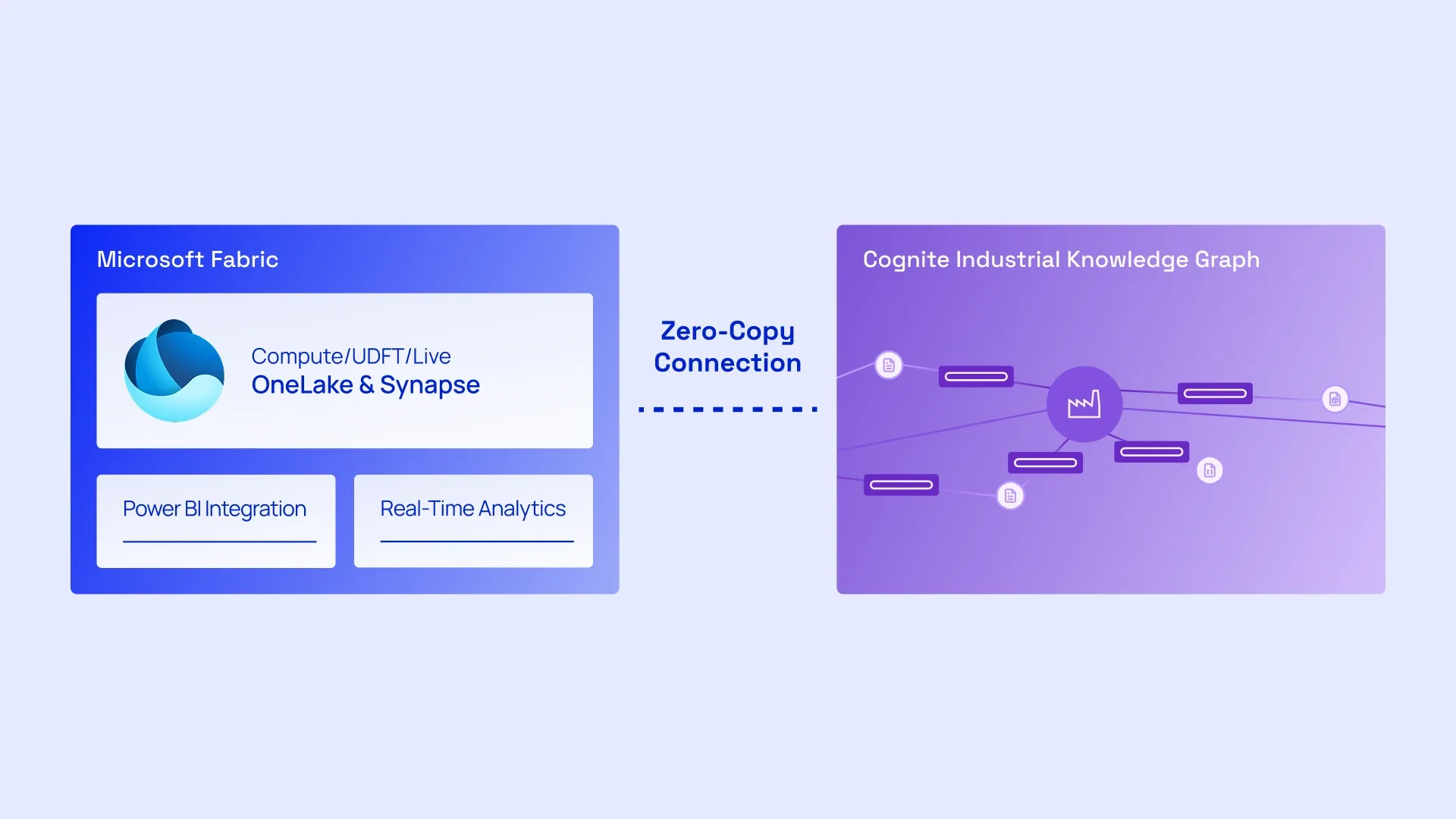
To streamline enterprise data pipelines and eliminate redundant cloud overhead, Zero-Copy Inbound for Microsoft Fabric OneLake (Public Preview) enables direct, zero-duplication data integration into Cognite Industrial Knowledge Graph. Teams can now stream live Microsoft Fabric OneLake data directly into their data models, bypassing staging pipelines and eliminating redundant data storage. By eliminating intermediate extractors and redundant storage layers, this zero-copy capability reduces cloud costs, eliminates engineering pipeline overhead, and shortens time-to-value for enterprise analytics.
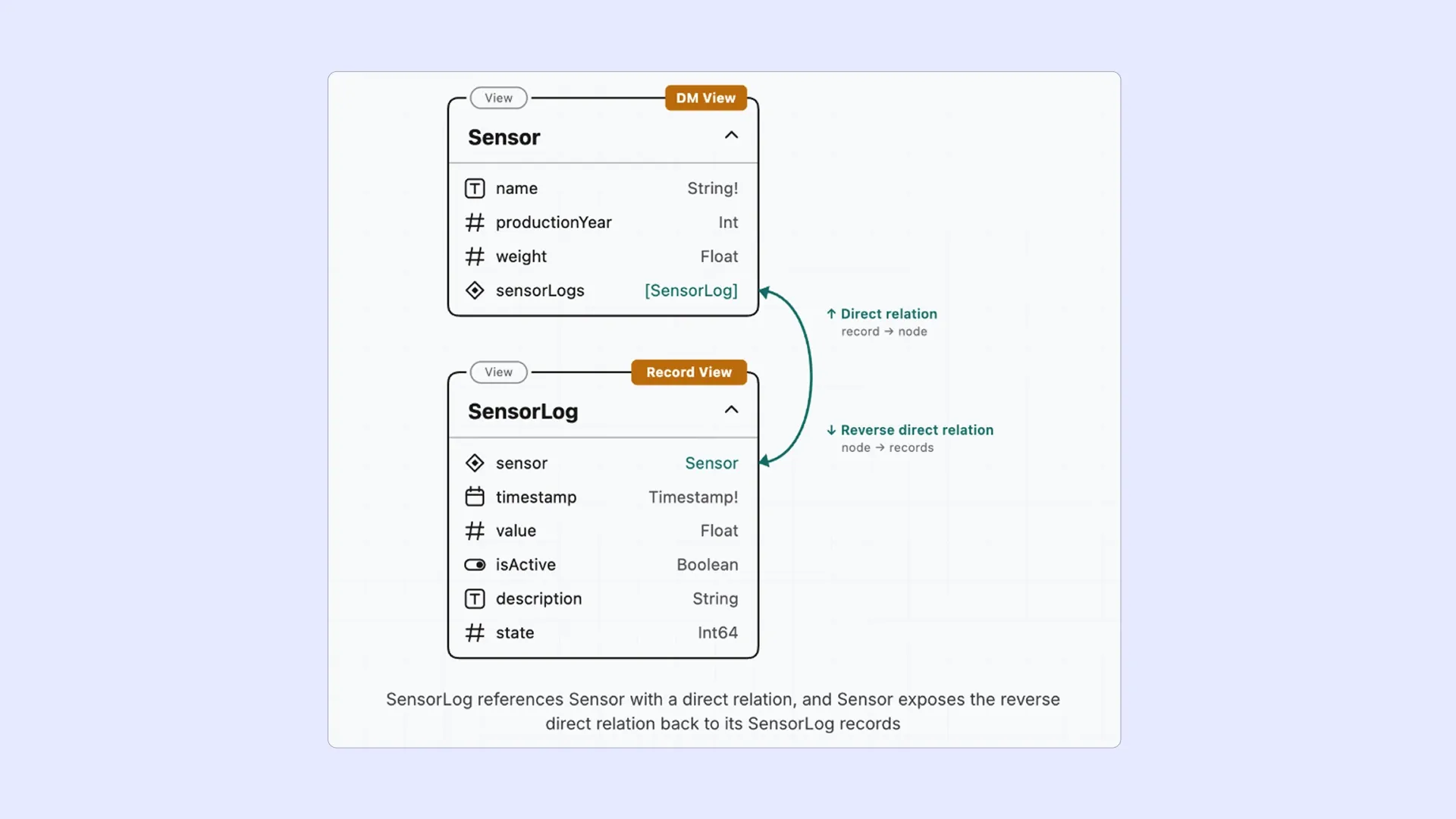
Records, a purpose-built storage layer for high-volume, machine-generated data such as logs and events. By linking this data to the assets and equipment it describes, Records preserves operational context at scale while keeping the Industrial Knowledge Graph performant. Teams can now navigate those connections in both directions. For example, they can open a compressor to find its alarm and event history, or start with an alarm and trace it back to the affected equipment. Users get the complete operational context needed to investigate issues faster, without having to know where each piece of information is stored. At the same time, builders can bring that context into more AI experiences and applications without creating custom connections.
This release brings performance upgrades in Unified 3D, replacing heavy upfront scene loading with smart on-demand data fetching. For heavily contextualized CAD models, these improvements deliver up to 100x faster loading while reducing data calls by 98%, enabling users to navigate complex facility models and 360° site imagery more quickly and smoothly. These 3D performance gains are paired with a redesigned 3D Management workspace, featuring intuitive Points of Interest (POI) tree views, modernized controls, and smart icon clustering, making it easier for operators to jump straight to critical plant locations without visual noise.
Our Q3 release unites the user experiences, agentic capabilities, and trusted data foundation needed to move industrial AI beyond isolated pilots and into an enterprise-wide system of action.
When every user, agent, and application works from the same trusted industrial context, domain experts can reimagine long-established ways of working and replicate what succeeds across teams, workflows, and sites. This embeds intelligence into the core of operations and sets a new standard for how industrial AI delivers value – safely, repeatably, and at enterprise scale.
Ready to put trusted industrial AI to work across your operations? Book a meeting with our team.