

Impact World Tour Amsterdam: Industrial AI Moves From Pilot to Scale
On October 15, Cognite’s Impact World Tour landed at the Radisson Blu in Amsterdam City Center. It was a condensed one-day take on the twice-sold-out Impact Conference, built around market insights, customer stories and a lot of networking. The agenda points to one theme: how industry gets AI out of isolated pilots and into everyday operations.
From Hindsight to Foresight
The day opened with a keynote from Cognite founder John Markus Lervik on rewriting the narrative of predictive intelligence. Industrial companies generate far more data than they did twenty years ago, yet many operations still look backward to explain what already happened. The session centered on a new foundation model trained exclusively on industrial data, aimed at turning scattered predictive use cases into an enterprise-wide capability.
ARC Advisory Group’s Colin Masson followed with an analyst view of “the (wild) state of Industrial AI,” covering what is driving the pace of change and where value is actually being captured today.
Proof in the Plant
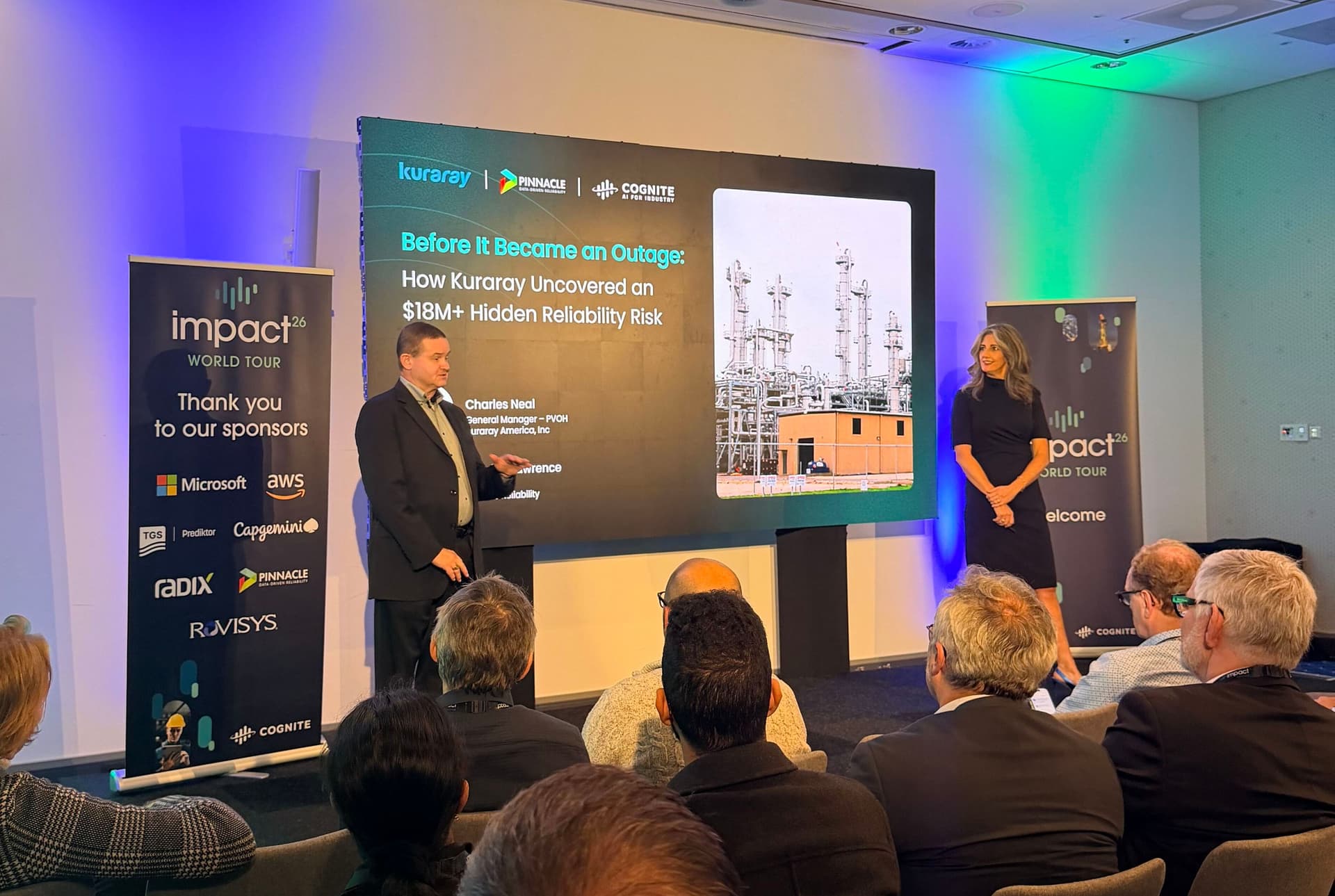
The customer sessions were the practical core of the programme. Kuraray and Pinnacle showed how contextualized data surfaced a superheater risk that traditional inspection had missed. Acting during a planned outage helped avoid an estimated $18M+ in production and reactive maintenance losses, a useful example as risk-based inspection rules evolve across Europe.
MaMaTa’s CTO, Olivier Lempereur, tackled the “morning after” of scaling. Because an OEM’s installed base never stops growing, onboarding is a permanent reality rather than a project. MaMaTa replaced dashboards with a single anomaly score per asset, and it deliberately leaves the final judgment to a human in the control room.
Croda offered a pragmatic route for companies with siloed systems like SCADA and SAP, often inherited through acquisitions. Instead of standardizing everything from scratch, they started with a focused pilot at one complex site and are using the lessons to build a phased, repeatable approach across their global network.
Foundations Matter
Several sessions argued that AI is only as good as the data beneath it. Dr. Michael Wiedau of DEXPI e.V. explained how open standards can make P&ID information structured and machine-readable, enabling ideas like P&ID auto-correction and AI-augmented HAZOP. A panel with SBM Offshore, Radix and Cognite explored how lifecycle data captured during the EPC phase shapes performance, reliability and safety for 15 to 20 years.
Cognite’s own product leadership, including Chirayu Shah and Geir Engdahl, joined Aker BP’s Dmitriy Belozerov for a keynote on the next generation of operations. They covered Cognite Flows, Atlas AI, the industrial knowledge graph and the company’s time series foundation model.
Security and Sovereignty
Two sessions addressed concerns that rise with every new connected system. Omny demonstrated how pairing Cognite’s connected operational model with security data can shrink vulnerability discovery from weeks to near-instant visibility. In the afternoon, a panel with Microsoft, TGS Prediktor and Cognite examined how European heavy industry can scale AI under the EU AI Act and Data Act while keeping control over data, infrastructure and partners.
The Human Side
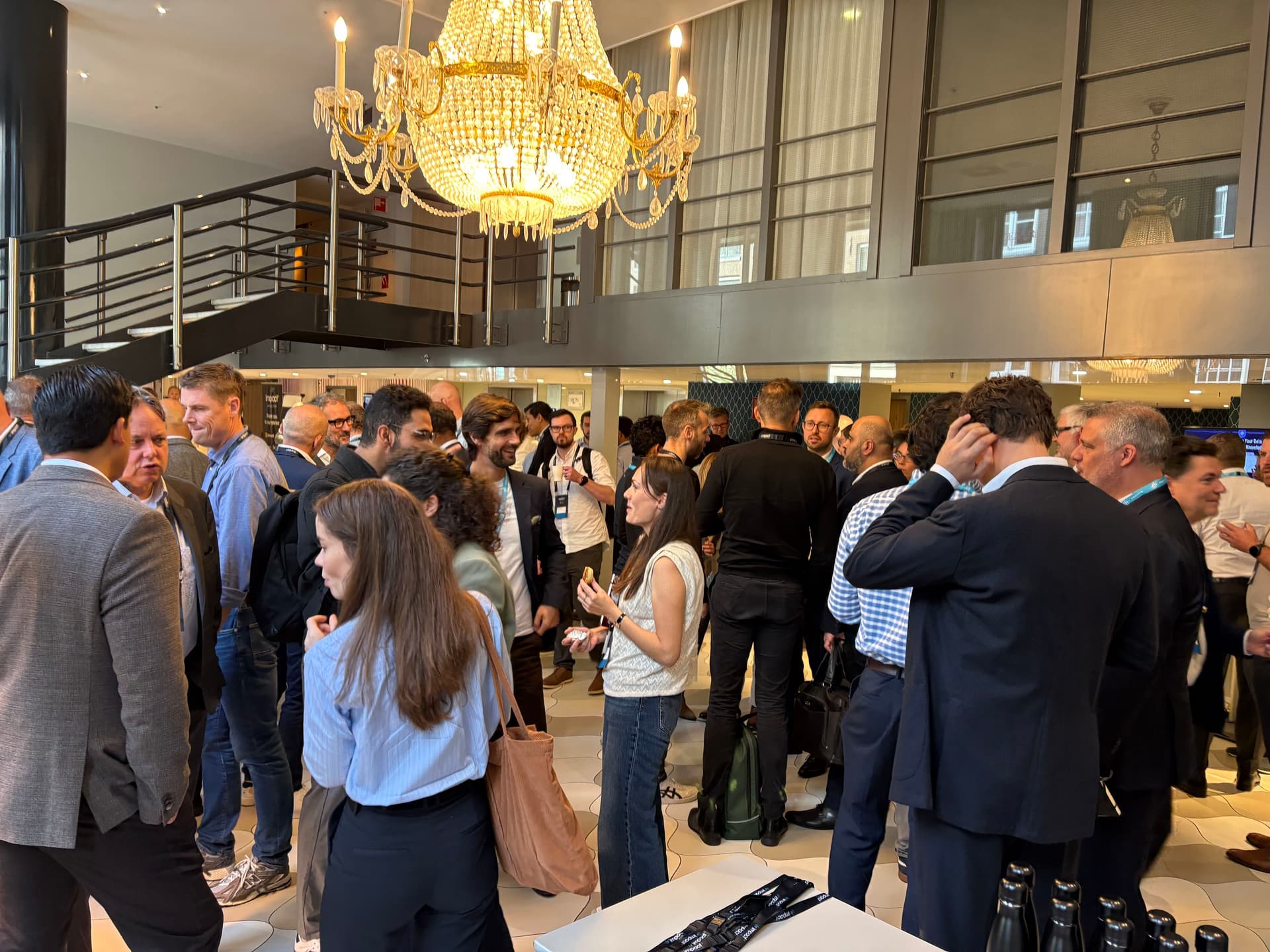
Between sessions, the day was built around people: a networking breakfast, two expo coffee breaks, lunch with sponsors, and a closing cocktail reception. For an industry where progress depends on sharing hard-won lessons, that time on the expo floor is arguably as valuable as the stage content.
Takeaways
Across every talk, three messages stood out.
- Scale has to be designed in from day one.
- Contextualized, open, well-structured data is the real prerequisite for industrial AI.
- Trust, whether in data, security or sovereignty, decides how far and how fast companies can go.
All in all, this was a successful stop on the Impact World. Now on to Southeast Asia in November, and Boston in December!