

The industrial historian has served manufacturing organizations well for decades. It captured what happened on the plant floor and made that record available when frontline workers needed it. For a long time, that was enough.
Now, industrial organizations have an opportunity to do more with their operational data. They can detect anomalies earlier, optimize production in real time, and provide trusted insights to everyone who needs them, without months of data engineering work. The question they are asking is how to prepare this rich repository of operational data for AI agents that can work alongside their teams to reason over it, surface trusted insights, and drive action across every function and role in the organization.
Cloud migration alone is not enough
Moving historian data to the cloud has been a logical step, and it has delivered significant value. Better accessibility, less on-premises infrastructure, and data closer to the tools organizations want to use. What we've seen is that migration alone doesn’t address all the challenges required to make this data actionable.
- Most site historians capture only a fraction of available data. Tag-based architectures were built when storage was expensive and connectivity was unreliable. Organizations have had to prioritize which data to store. Valuable data from IoT sensors, edge devices, and SCADA or distributed control systems is still inaccessible. Moving a partial record to the cloud keeps it partial.
- Raw time-series data lacks the context AI needs. While historians store values, they do not store relationships. Those with asset hierarchies still have only one relationship type mapped. Without knowing which asset a reading came from, how that asset connects to the surrounding process, or what the engineering documentation says about its normal behavior, an AI agent has a limited understanding of how to interpret this data.
- Traditional historians capture operational data in isolation. The use cases that matter most, reducing downtime, improving quality, optimizing production, etc., require more than sensor readings. They require context from IT systems such as ERP and MES, as well as engineering sources such as P&IDs, 3D models, and inspection records. A historian stores only OT data, limiting the types of use cases it can address.
What an AI and Cloud Native Historian can do
At Cognite, we believe the historian market is ready for a meaningful step forward. The next generation of historians can capture all operational data, not just what fits inside a tag budget. That means high-frequency sensor streams from SCADA and DCS systems, data from IoT devices and edge solutions that traditional historians never reached, IT systems like ERP and MES, and engineering sources including P&IDs, 3D models, and inspection records. Understanding what sensor readings mean requires knowing the physical and engineering context they come from.
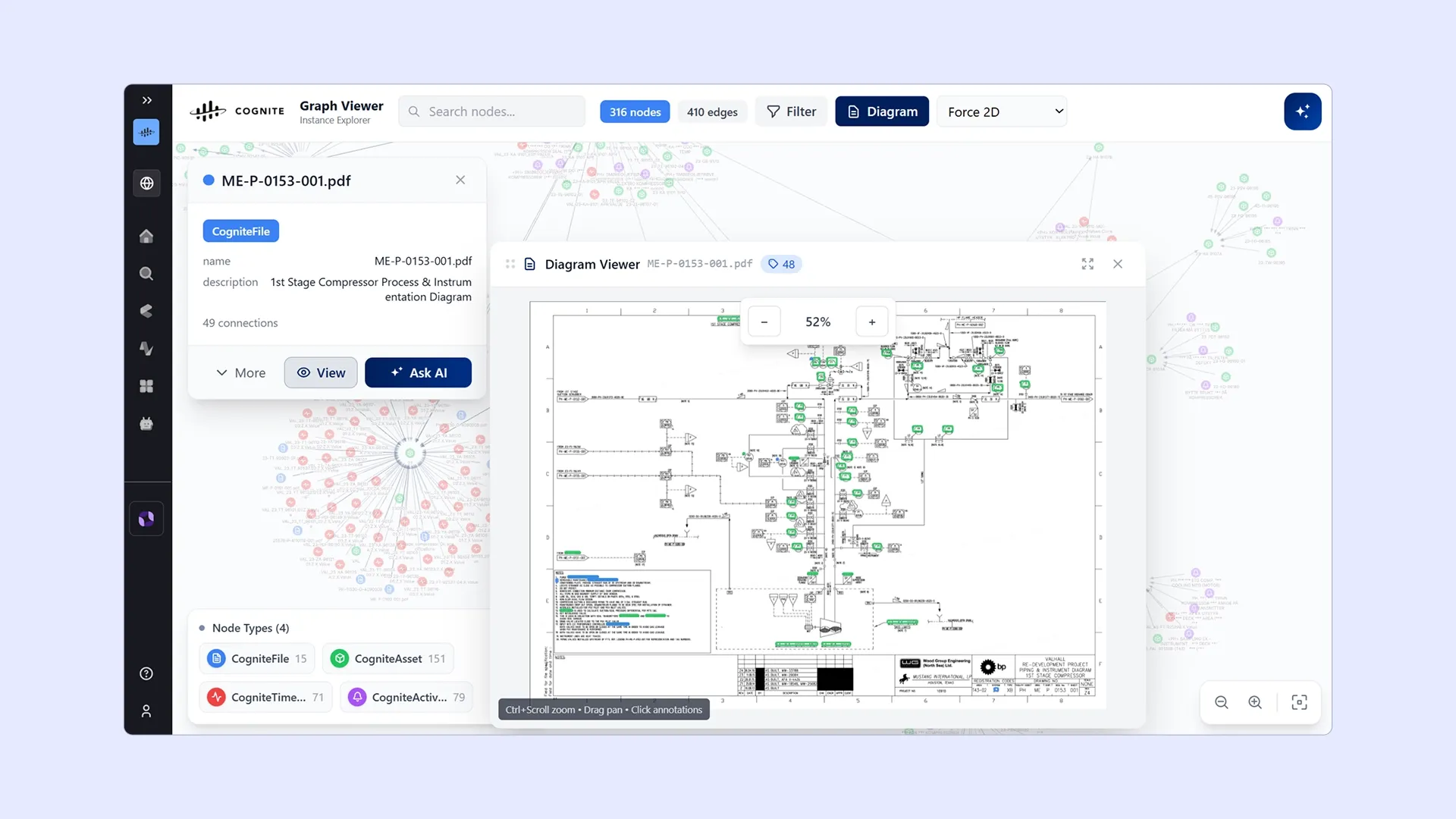
Today, industrial organizations are already using the Industrial Knowledge Graph in Cognite Data Fusion® to address this.
It starts with OT data at the core. Cognite stores over 95 trillion data points from over 850 Million Tags across our clients. This, alongside billions of alarms and system events are made available in <300 milliseconds for mission-critical applications. Pre-aggregations, cloud-first architecture, and more ensure it’s performant at the biggest scale, and ready for use by the most demanding applications, analytics, and AI.
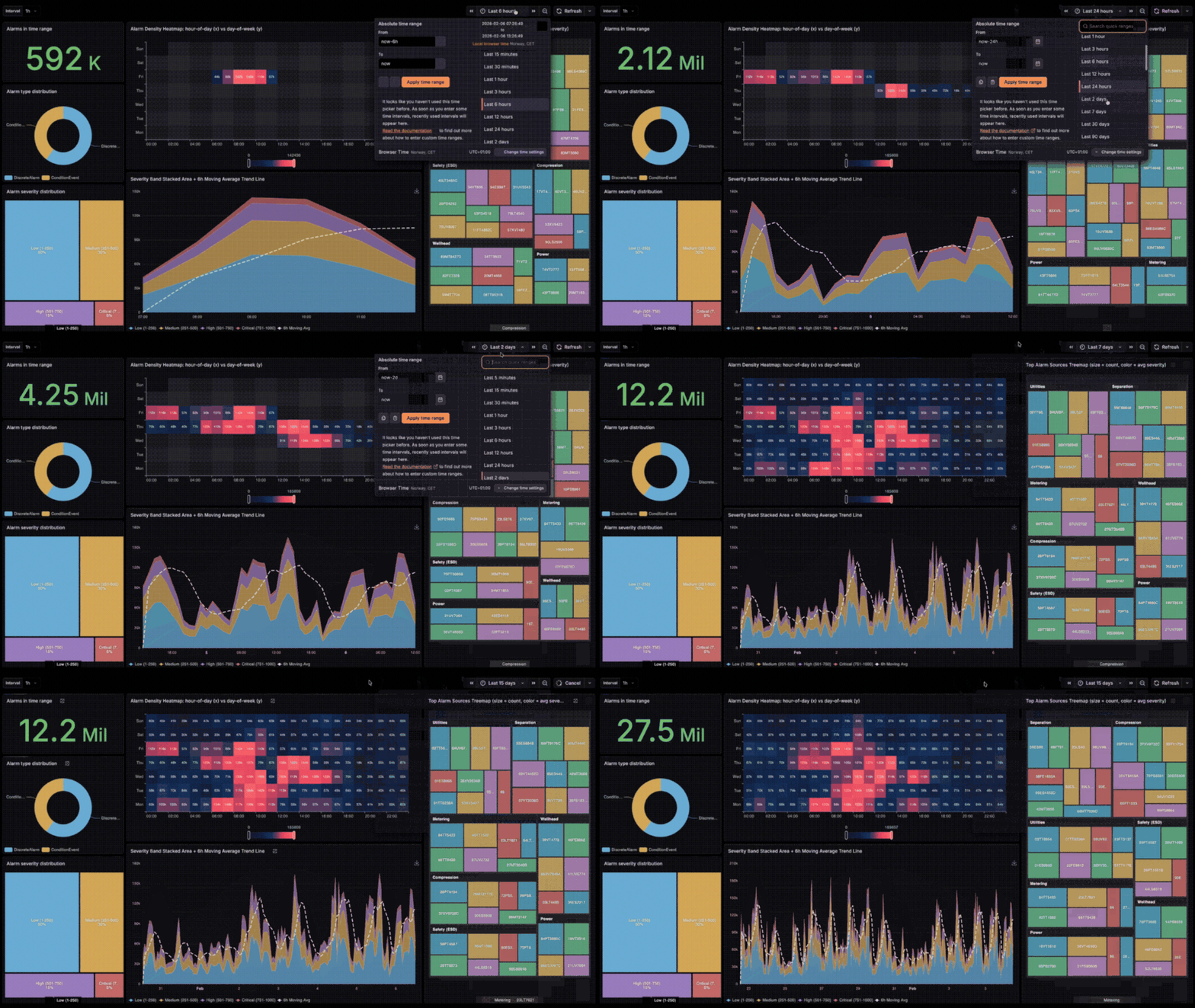
However, rather than storing isolated time-series values, OT sensor streams, IT transactions, and engineering assets are contextualized into a single, semantically rich data model. Every data point connects to the asset it came from. Every asset connects to the process it belongs to. Every process connects to the outcomes the organization cares about. With a highly optimized time series database, Cognite Data Fusion© scales to millions of tags and trillions of data points while maintaining the relationships that make the data useful.
Industrial AI that Teams Can Trust
Contextualizing data is the foundation. Building AI that teams will actually act on requires one more thing. Agents need to reason and act on this information in a way that is traceable and transparent.
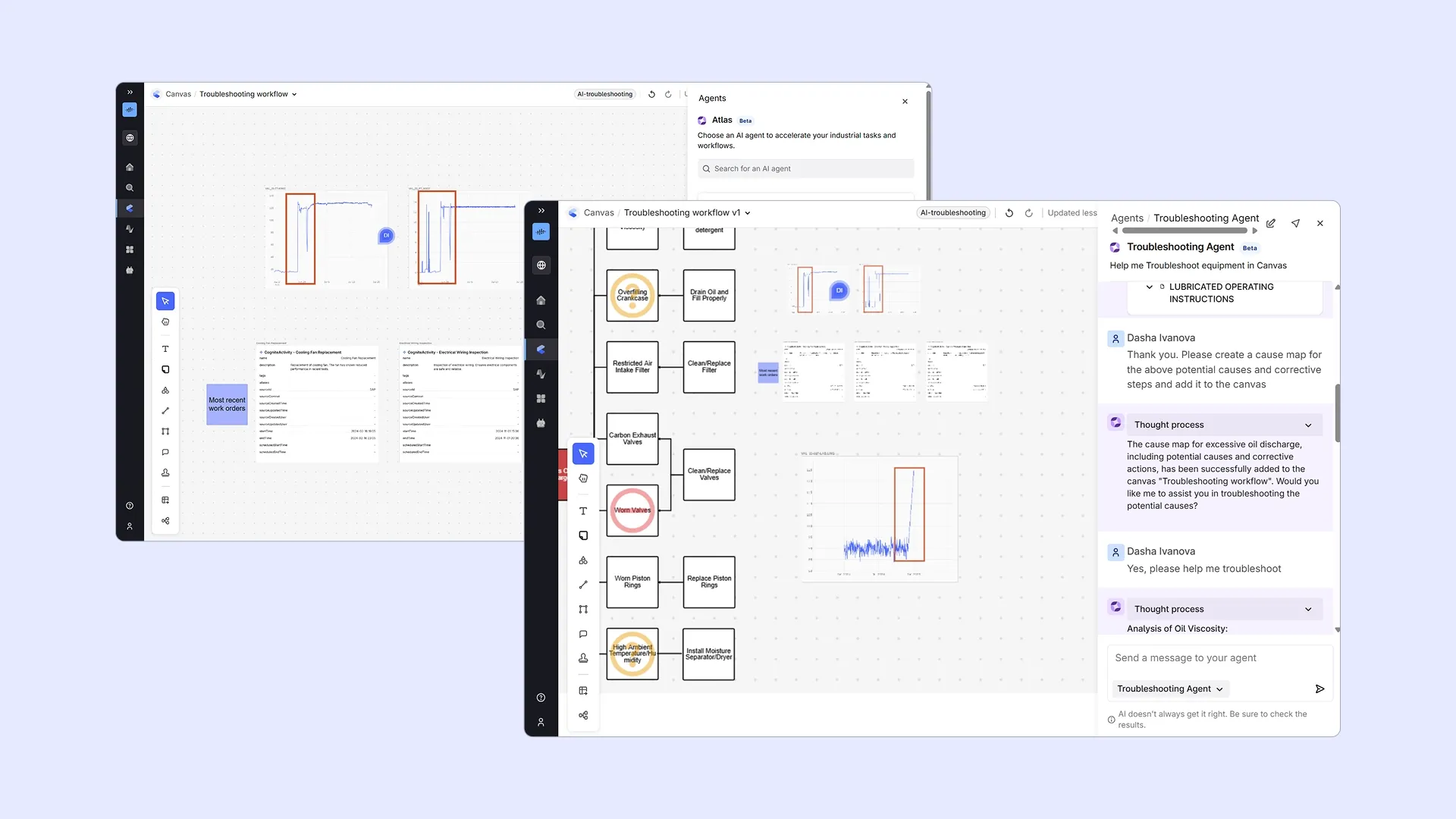
Cognite Atlas AI™ is built on top of the Industrial Knowledge Graph for this purpose. When an Atlas AI agent surfaces a potential equipment failure, it points to the specific sensor readings that triggered the finding, the engineering documents that describe the failure mode, and the work order history for similar issues on that asset. That traceability is what gives industrial teams the confidence to act rather than investigate further.
But off-the-shelf language models don’t know industrial data. That’s why last year Cognite partnered with NVIDIA to build a native industrial time-series foundation model. With it, our clients can perform predictive forecasting, automated state calculations, and anomaly identification directly on raw sensor data streams, eliminating manual alert engineering. More equipment, at lower effort, can be monitored than ever before.
From Insight to Action
Data and AI only create value when they change what people do. Traditional historians have offered dashboards, visualizations, and basic trend analysis, and those tools have been valuable for generating insight. But insight generation and driving action are two different things. Historian visualization tools were built for observation, not for workflow, and migrating that data to the cloud without a semantic structure means your applications and agents risk becoming bespoke and unable to scale.
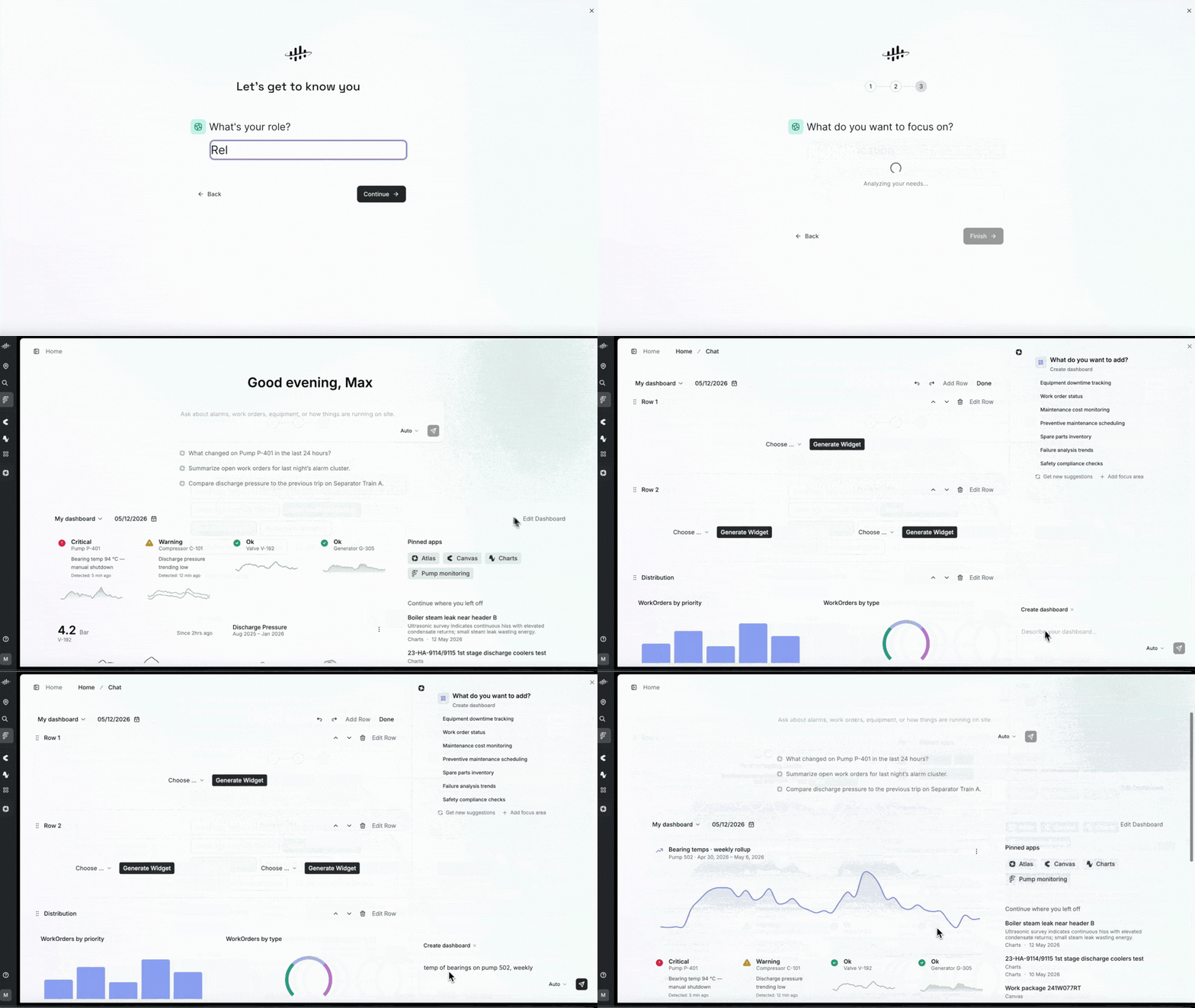
Cognite Flows™ is where AI agents and industrial teams work together to drive outcomes. It is Cognite's native application layer that embeds AI agents directly into the workflows where decisions are made. Flows delivers an adaptive experience tailored to each role. An operations engineer has real-time anomaly alerts that are automatically surfaced and recommended actions grounded in an industrial knowledge graph. A maintenance technician sees work packages pre-populated with equipment history and documentation. A plant manager sees production trends connected to business outcomes. Additionally, Flows supports building custom, production-grade applications with agentic AI coding tools, embedding agents into proprietary workflows in days instead of months.
Real-world Impact
When operational data is contextualized with IT and engineering data and connected to agents that can reason over it, organizations can realize a 465% ROI by increasing throughput, reducing unplanned downtime, and increasing operational efficiency. Here are 3 use case examples that illustrate the impact of an AI and cloud native historian:
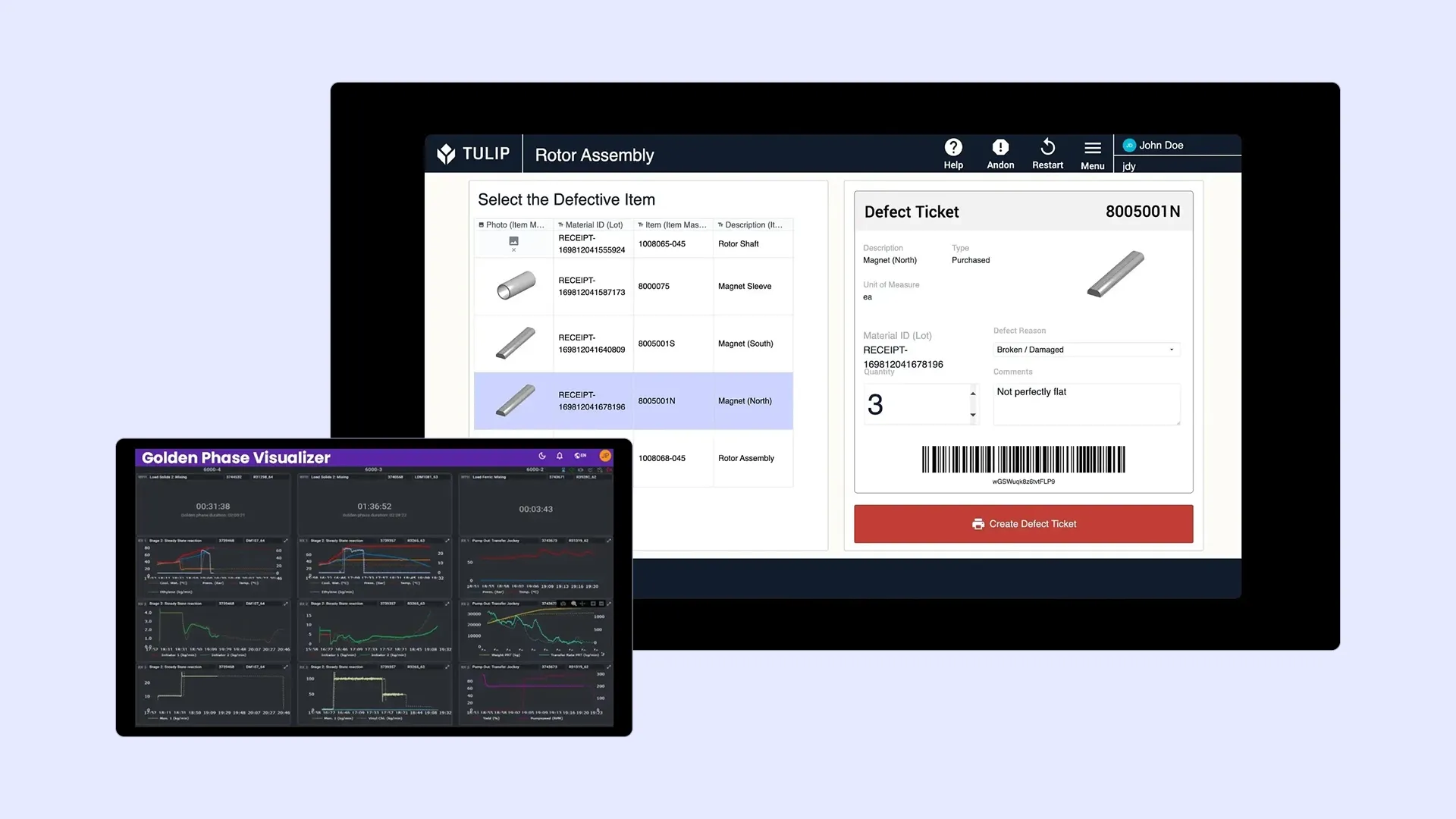
- Golden Batch. Small variations across process parameters over hours or days can separate a good batch from a bad one. With a Golden Batch solution, process engineers can detect deviations early and adjust operating parameters back toward ideal conditions using an AI agent that reasons across the full process, not just a curated subset of historized tags.
- Quality Management. AI-powered quality management uses live operational data to flag quality risk before a non-conformance occurs. When deviations happen, agents compress root-cause investigation cycles from days to hours.
- Increasing Uptime. AI-driven uptime solutions combine real-time sensor data with equipment history and engineering documentation to detect failure signatures that rule-based systems miss. Agents reason across the full context of an asset, surfacing precursors earlier and giving maintenance teams traceable evidence to act on.
The Opportunity Ahead
For industrial organizations evaluating how to make historian data available in the cloud, the most important question to ask is whether the approach can deliver the AI readiness and innovation to deliver business impact. Moving data is a meaningful first step. But the real opportunity goes further.
Capturing all operational data, contextualizing it so every data point carries meaning, grounding AI agents in that structure, and embedding those agents into the workflows where decisions get made. That’s how today’s historian becomes tomorrow’s system of action.